
Indian classical dance is one of Singapore’s richest performing traditions. Every week, somewhere on the island, young dancers rehearse footwork in a studio, a company premieres a new work, or a student makes her formal debut in front of family and teachers. Yet many Singaporeans have never seen a full performance.
Here’s a guide to the main dance forms, how to follow a performance, and where to watch or learn in Singapore.
The dance forms you’ll see in Singapore
India has several classical dance traditions, each from a different region. In Singapore you’ll mostly encounter these:
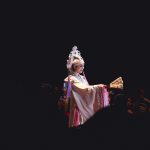
- Bharatanatyam from Tamil Nadu is by far the most widely taught and performed form here. Look for crisp geometric lines, a bent-knee stance, rhythmic footwork and expressive storytelling.
- Kathak from northern India is known for fast spins and intricate footwork, with ankle bells ringing out complex rhythms.
- Kathakali from Kerala is dance-drama with spectacular make-up, huge costumes and exaggerated facial expressions, traditionally performed by men.
- Odissi from Odisha features flowing, sculptural poses inspired by temple carvings.
- Kuchipudi from Andhra Pradesh is lively and theatrical, sometimes with dancers balancing on the rims of brass plates.
- Manipuri from north-east India is gentle and lyrical, with soft, swaying movements.
How to follow a performance
Indian classical dance combines two elements. Nritta is pure dance: rhythmic patterns and movement for their own sake, often getting faster and more intricate. Nritya and abhinaya are the storytelling parts, where dancers use facial expressions and hand gestures to tell stories, usually from Hindu epics such as the Ramayana and Mahabharata, or love poetry.
The hand gestures, called mudras, form a vocabulary. A single gesture can mean a lotus, a deer, a bow or the moon, depending on context. You don’t need to know them all. Watch the dancer’s face and you’ll get the emotion of the story.
Many performances use live music: a vocalist, a mridangam (drum), a violin or flute, and a nattuvanar, who keeps the rhythm with small cymbals and spoken syllables. Watching the interplay between dancer and musicians is half the fun.
The companies and schools to know
Apsaras Arts
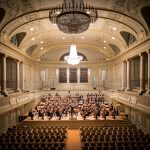
Founded in 1977, Apsaras Arts has engaged audiences through bharatanatyam and other classical forms for nearly 50 years. It works both as a repertory company and as a dance academy. Its late co-founder, Neila Sathyalingam, was a Cultural Medallion winner trained at the famed Kalakshetra academy in Chennai. Its artistic director, Aravinth Kumarasamy, received the Cultural Medallion in 2022. The professional wing, Apsaras Dance Company, was the first recipient of Singapore’s Stewards of Intangible Cultural Heritage Award. It is known for large productions that blend Indian and Southeast Asian cultures. In August 2026, for example, it performed with musicians from the Singapore Symphony Orchestra at the Esplanade Theatre.
Bhaskar’s Arts Academy and Nrityalaya
Bhaskar’s Arts Academy is one of Singapore’s oldest Indian arts institutions. Its teaching wing, the Nrityalaya Aesthetics Society, was established more than 70 years ago. The academy also has a kathakali troupe, a rare sight outside India.
Other organisations
The Singapore Indian Fine Arts Society and the Temple of Fine Arts also teach and promote Indian dance, music and related arts, and stage performances throughout the year.
Where to watch
Kalaa Utsavam at the Esplanade
Each November, the Esplanade’s Kalaa Utsavam – Indian Festival of Arts brings together dance, music and theatre from Singapore and India. Alongside ticketed productions, it has plenty of free performances, including showcases by young dancers. It’s the best single place to sample several styles in one weekend. See the Esplanade website for the next edition, and our arts festival calendar for the rest of the year.
The Raga series
Outside the festival, the Esplanade’s Raga series presents Indian music and dance throughout the year, from intimate recitals to large crossover works.
Studio performances
Companies often stage smaller works in their own studios. Apsaras Arts, for example, runs an intimate dance series called Darshana, with solo recitals by Singapore dancers. These are a great way to see a dancer up close.
Arangetrams
An arangetram is a dancer’s formal solo debut after years of training, usually a two- to three-hour recital in a theatre. They’re mostly invitation-only family occasions, but if a friend or colleague invites you, go. It’s a moving experience and a showcase of everything a dancer has learned.
Deepavali and festivals
During the Deepavali season, performances pop up in Little India, community clubs and malls. These are short, free and festive.
Learning Indian classical dance
Indian classical dance is taught widely in Singapore, and you don’t need to be of Indian heritage to learn. Indian dance is a popular co-curricular activity: in 2022, 49 primary schools offered traditional Indian dance as a CCA. Many academies take adult beginners too, and community clubs run short courses through the People’s Association. Bharatanatyam classes for beginners focus on basic footwork units called adavus, which build strength, balance and rhythm.
If your child is interested, our guide to how arts training shapes young creatives has useful context. Adult learners can browse more options in our guide to classes for adult beginners.
Tips for first-timers
- Read the programme notes. They usually summarise the story behind each piece.
- Sit where you can see faces. Expressions matter, so mid-stalls is better than the back.
- Clap at the end of each item, not in the middle, unless the audience around you does.
- Use your credits. Many ticketed Indian dance productions accept SG Culture Pass credits.
Indian classical dance is centuries old but constantly being reimagined in Singapore. A single performance is enough to see why it has such a devoted following.